Master any alloy in days, not months.
A vendor-agnostic, ML-driven parameter engine purpose-built for metal LPBF.
- Parameter prediction
- Custom alloy compositions
- Design of experiments
- Property prediction
INTRODUCTION.
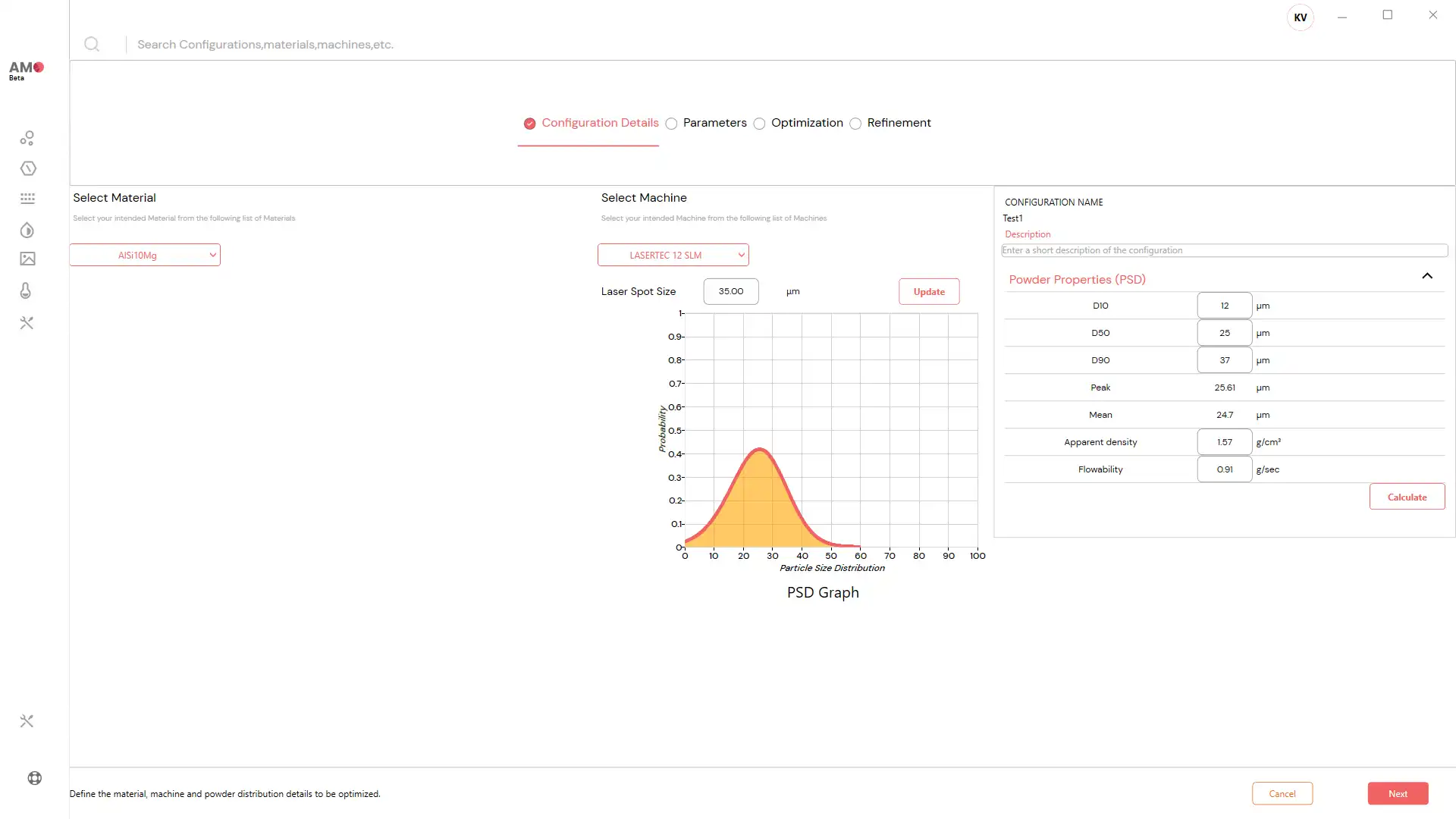
Developing print parameters for a new alloy traditionally takes months of costly trial and error, and parameters tuned for one machine rarely transfer to another. AM OptoMet automatically generates optimised parameters for any material, layer thickness and machine.
Because it reasons on process physics, predictions transfer across LPBF brands with far less recalibration, and every build result makes the model sharper.
- Ensures first-time-right builds
- Improves the efficiency of existing AM systems
- Saves raw material and operating costs
- Works with any metal powder supplier
- Validated with 5000+ laser-hours of metal 3D printing
KEY FEATURES.
WHY AM OPTOMET.
The challenge
- Developing print parameters for new alloys takes months of costly experimentation
- Parameters tuned on one machine rarely transfer to other vendors or configurations
- Production-scale AM demands consistent quality across materials and machines
How AM OptoMet helps
- An ML-based parameter engine purpose-built for metal LPBF
- Vendor-agnostic: parameters transfer across machine brands and configurations
- Self-improving: each build result feeds back into the model
HOW IT WORKS.
-
Define the alloy
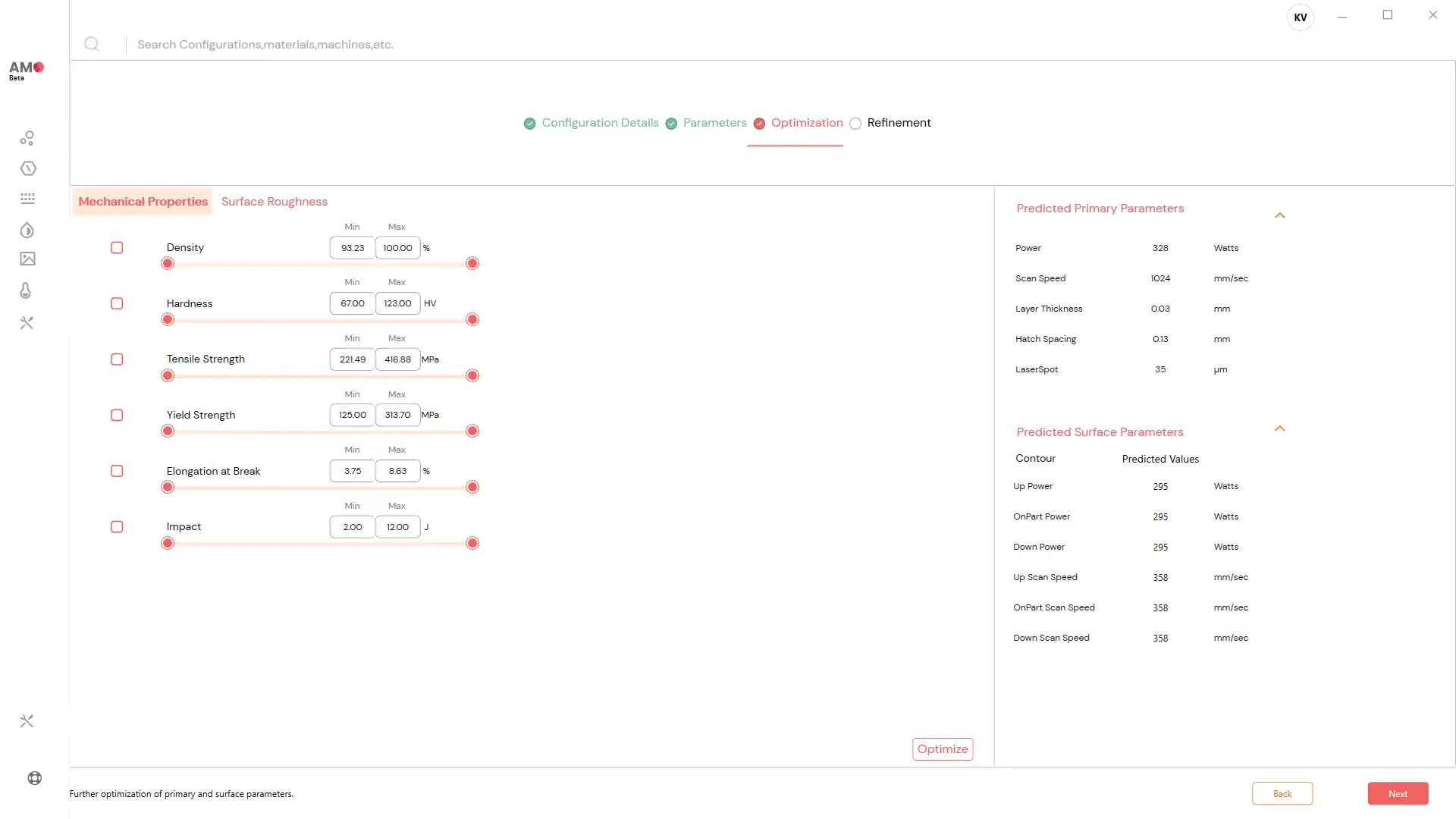
Select an existing material or define a custom composition, target layer thickness and machine using the built-in periodic-table interface.
-
Predict
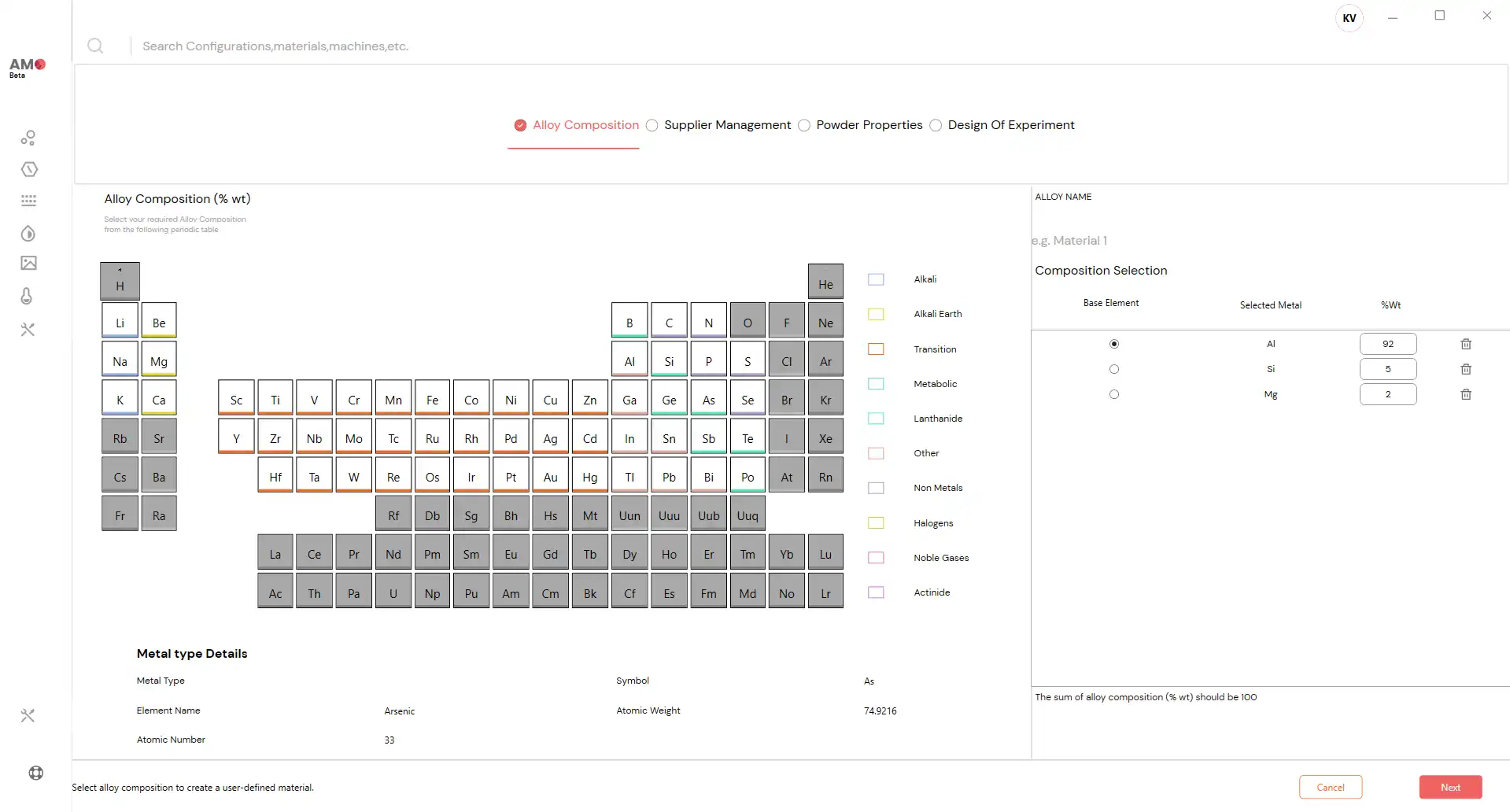
A machine-learning model trained on prior build outcomes (density, surface roughness, mechanical properties) predicts an optimised parameter set without physical trial builds.
-
Confirm
A structured design-of-experiments plan suggests the minimum number of confirmation prints needed to validate the prediction.
-
Improve
Each build result feeds back into the model, sharpening future predictions across LPBF brands.
FROM COMPOSITION TO PROPERTIES.
PRODUCT SUITES.
Choose the edition that matches how you work with materials.
Blitz
Available for all LPBF machines
The performance version, for machine users and service bureaus starting their AM journey or printing standard alloys on demand.
- Parameter prediction for user-defined materials
- Fine-tuning process parameters
- Productivity enhancement
Horizon
Available for all LPBF machines
The research version, for material manufacturers, research labs and R&D organisations developing new alloys.
- Faster prediction of process windows
- Parameter prediction for user-defined materials
- Database backup generated by experiments
- Calibration of new and existing parameters
Ultimate
Available for all LPBF machines
Combines Blitz and Horizon for the complete benefits of AM OptoMet. An Ultimate Lite version with limited predictions is available for universities.
- Everything in Blitz
- Everything in Horizon
“Intech’s AM OptoMet, in turn, gives users a reliable tool to successfully calculate print parameters and predict print properties with a simulated iterative approach. This reduces the development time to hours/days.”Dr. Evangelia Caraxis, Managing Director, CONIFY
CONNECTED IN AM SUITE.
AM OptoMet is one of the connected products in AM Suite, Intech's software ecosystem for the complete metal AM workflow.